

Logistics Services in Cambodia
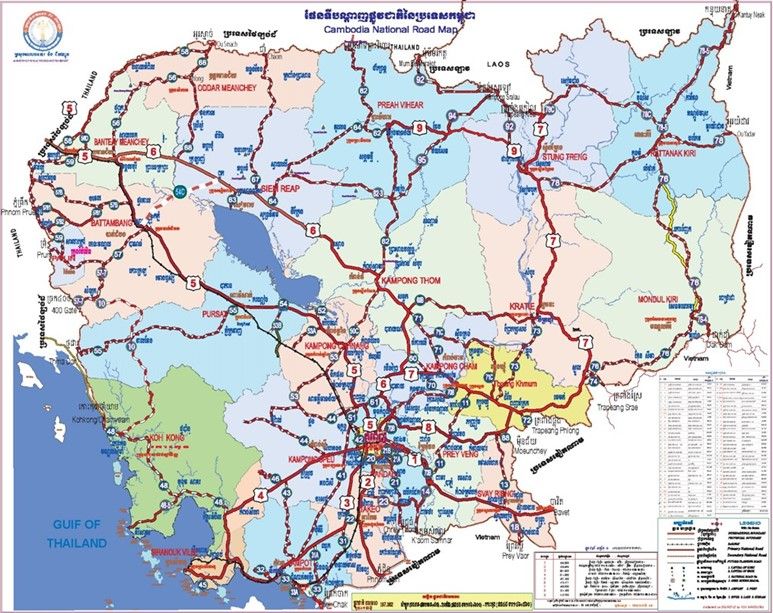
Overview
- Cambodia is rebuilding economic, social, and physical foundations after years of conflict.
- Since 1992, the World Bank has provided:
- US$645.2 million in loans and grants
- US$90 million in trust funds
- Contributions include:
- Building and rehabilitating rural roads (a government priority)
- Establishing guidelines for transport sector reform through the Road Rehabilitation Project
- Clarifying management roles for national, provincial, and rural roads (2002 transport strategy)
- Challenge: despite progress, transport infrastructure quality remains a serious constraint.
- Road maintenance fund (2002) based on fuel tax revenue exists, but lacks effective management.
Roads and Highways
- Total network: 38,257 km
- 4,757 km national roads (Ministry of Public Works and Transport)
- 5,700 km provincial roads
- 27,800 km tertiary roads (Ministry of Rural Development)
- Rehabilitation efforts since mid‑1990s.
- Road transport industry:
- Embryonic and inefficient
- Fleet fragmented; few groups professionally managed
- Reliance on old, overloaded trucks with low utilization
- In isolated regions: motorcycles and animal‑drawn vehicles dominate
- Vehicle registration (2003):
- 84,000 four‑wheel vehicles
- 248,000 motorcycles
- With unregistered vehicles: ~102,810 light vehicles, 17,880 heavy vehicles, 326,310 motorcycles
- Vehicle ownership: 0.8 four‑wheel vehicles per 100 people (very low).
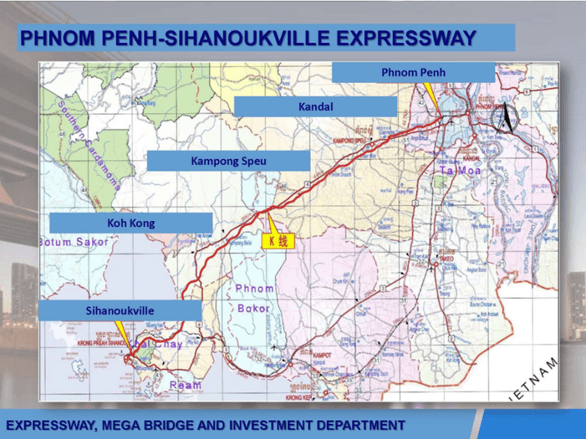

Urban Transport
- Severely damaged/neglected during years of conflict.
- Entirely road‑based; traffic volumes rising rapidly in Phnom Penh and Siem Reap.
- Public transport limited to buses; no subway system.
- Issues:
- No formal road/transport policy
- Congestion emerging in Phnom Penh
- Insufficient finance for maintenance and paving unpaved roads
- Needs:
- Strategic transport policy framework
- Facilities for non‑motorized traffic
- Consideration of rail’s role
- Private sector involvement (e.g., tolls).
Rural Transport
- Traffic levels suppressed by poor road conditions, low incomes, and small vehicle fleet.
- Rapid growth since late 1980s as constraints eased.
Railways
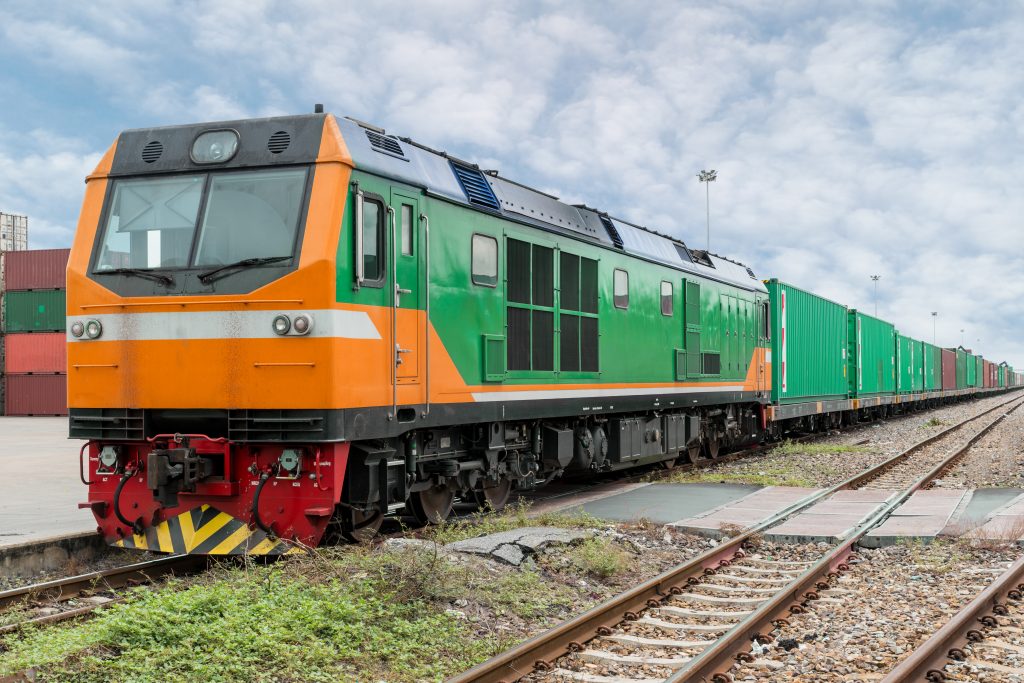
- Royal Cambodian Railway: two single‑track meter‑gauge lines.
- Northern Line: Phnom Penh → Poipet (385 km).
- 15 km gap between Poipet and Thai station Aranyaprathet (since 1961).
- Last 48 km (Sisophon → Thai border) disused since early 1970s.
- Originally intended to link Bangkok with Saigon; Cambodia’s section never built.
- Southern Line: Phnom Penh → Sihanoukville (253 km).
- Built 1960–1969; currently poor condition.
- “Bamboo trains”: locally made units for limited passenger/freight transport.
Inland Waterways
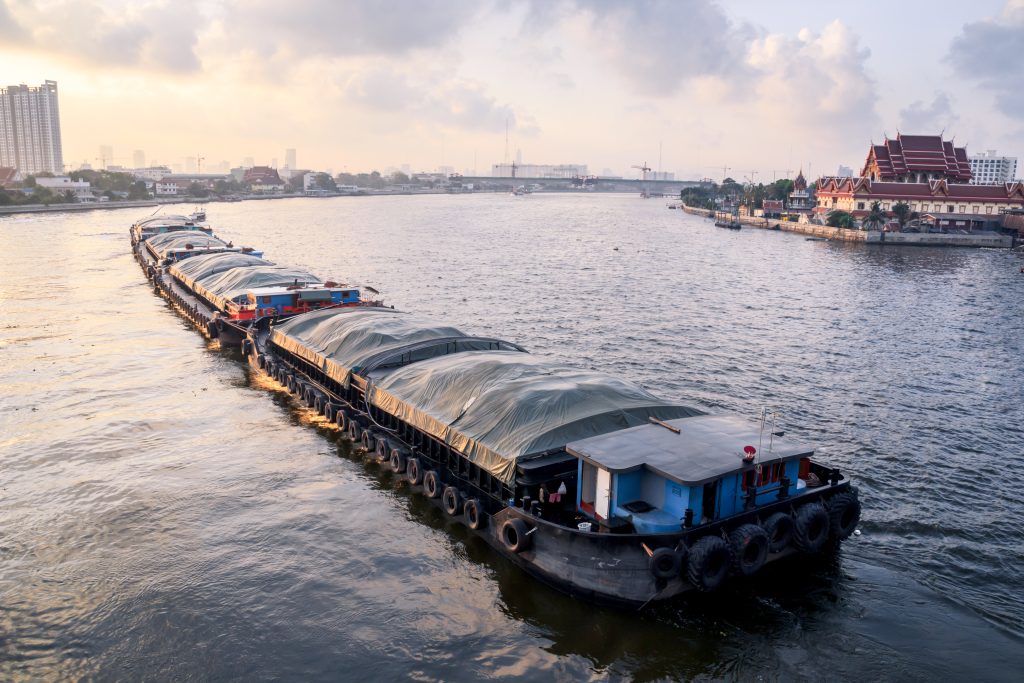
- Mekong and Tonle Sap rivers are key transport arteries.
- Phnom Penh: ~100 km from Vietnam border by river.
- River bends limit vessels >110 m long.
- Capacity by section:
- Phnom Penh–Kratie: boats up to 150 tons
- Kratie–Stoeng Treng: 50 tons (rainy season); 20 tons (low water)
- Stoeng Treng–Lao border: 10–15 tons (low water); 50 tons (high water)
- Recent reports: decreasing Mekong flows further constrain transport.
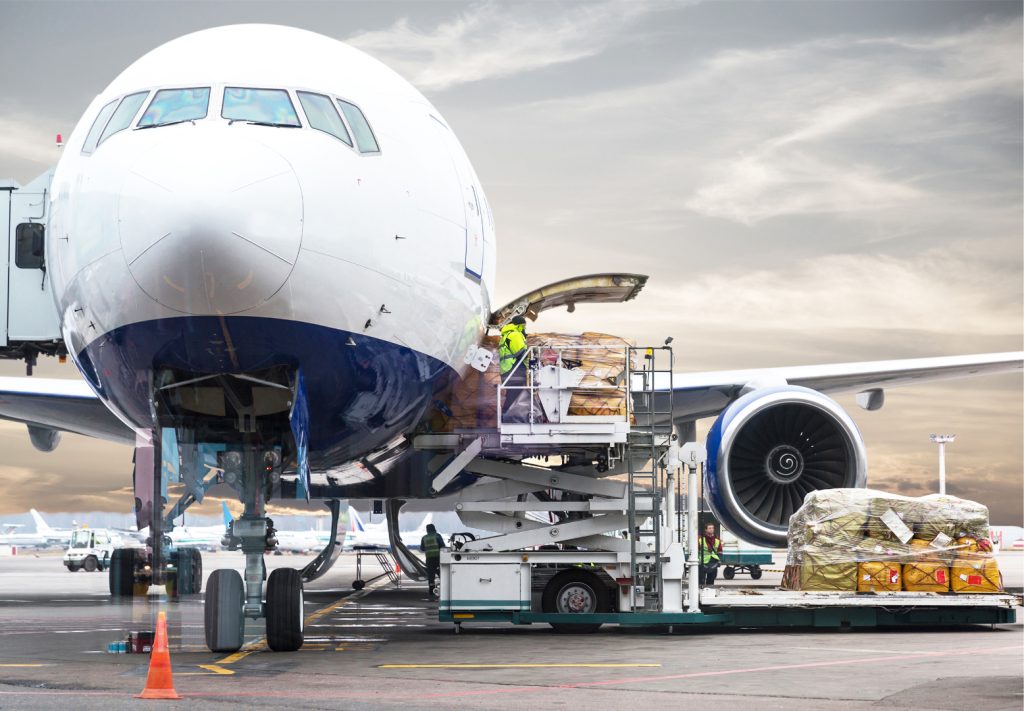
Air Transport
- 10 airports, including Phnom Penh International (Pochentong) and Siem Reap (gateway to Angkor Wat).
- Managed by Société Concessionnaire de l’Aéroport (SCA) under 25‑year concession (from 1995).
- Operations partly delegated to Cambodia Airport Management Services Limited.
- Major improvement program (2003–2007), partly funded by IFC:
- Phnom Penh Airport (US$23.2 million):
- Runway lengthening/widening
- Parallel taxiway construction
- Apron and warehouse expansion
- Modernization of operating equipment
- Siem Reap Airport (US$23.9 million):
- Runway/taxiway repairs
- Extension of taxiway and aprons
- New terminal building
- Modernization of operational equipment
- New cargo warehouse
- Phnom Penh Airport (US$23.2 million):
GET IN TOUCH WITH US
We are available from Monday to Saturday.
Call us +855 77 755 001 | 011 755 001 | 069 755 001 and info@cfservicecooperate.com.kh